Are you a woman in Ireland living with type 1 diabetes who uses a diabetes sensor / Continuous Glucose monitor (CGM)?
Are you interested in taking part in a study investigating the impact of the menstrual cycle and menopause on glucose levels and quality of life in women with type 1 diabetes?
What do we know?
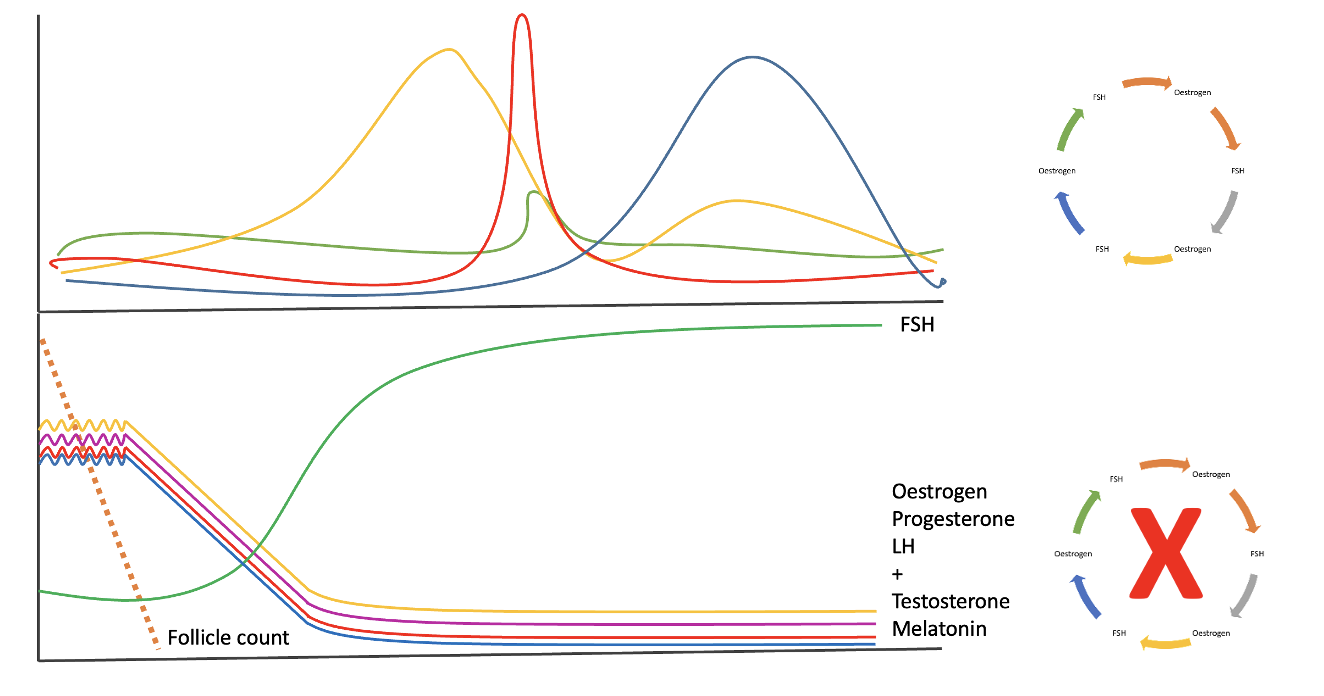
We know very little about how the menstrual cycle and menopause influence blood glucose levels and quality of life in women living with type 1 diabetes. Hormonal changes across the menstrual cycle and during menopause may affect glucose levels and diabetes management, but there has been very little research in this area. In the top graph, we see the hormonal changes during the menstrual cycle. In the bottom graph, we see the changes during menopause. These hormonal changes can have big effects on a woman’s quality of life, but these effects are not very well known or well captured, especially in women living with type 1 diabetes. These effects on blood glucose are essentially unknown.
What is our study and what would taking part involve?
We want to understand how glucose levels and experiences of hypoglycaemia vary across the menstrual cycle and after menopause, and how these relate to sleep, mood and quality of life in women with type 1 diabetes. Taking part is straightforward and involves a once-off 10–15 minute telephone call with a member of the study team, completing a 15–20 minute survey on your phone, and sharing the previous three months of your diabetes sensor (CGM) data. If you are premenopausal, you will also be asked to provide the start dates of your last three menstrual periods so that we can compare your glucose data with different stages of your menstrual cycle.
Who are we?
We are a research team of doctors, diabetes nurse specialists and dietitians working in diabetes departments across Ireland. The study is led by Dr Aisling McCarthy, an Endocrinology Specialist Registrar in Endocrinology at Galway University Hospital and PhD candidate at University College Dublin. The principal investigators are Dr Patrick Divilly, Consultant Endocrinologist in St Vincent’s Hospital, Dr Tomás Griffin, Consultant Endocrinologist in Galway University Hospital, Professor Ronan Canavan in St Columcille’s Hospital, and Dr David Slattery in St Michael’s Hospital.
Why is this study important?
Women’s experiences of diabetes across the life course have historically been under-researched. In particular, we still know relatively little about how the hormonal changes associated with the menstrual cycle and menopause affect glucose levels, hypoglycaemia and quality of life in women with type 1 diabetes. We want to better understand these experiences by studying women both before and after menopause. By accurately capturing how these stages of life affect women living with type 1 diabetes, we hope this research will help inform more personalised diabetes care in the future.
Has this study been ethically approved?
The HER-LIFE-T1D study has full ethical approval for national recruitment provided by Galway University Hospital. Ethical approval for recruitment through participating hospitals has also been obtained at University Hospital Galway, Roscommon University Hospital, St Vincent’s University Hospital, St Michael’s Hospital and St Columcille’s Hospital.
Interested in taking part?
If you are an adult woman living in Ireland with type 1 diabetes, use a diabetes sensor/continuous glucose monitor (CGM), and are either premenopausal with regular menstrual cycles (24–38 days) or postmenopausal (no periods for at least 12 consecutive months), you may be eligible to take part. If you are on contraception but have regular periods, you are also welcome to take part in this study.
If you are interested, please complete the study interest form and a member of the research team will contact you.
Providing your details does not mean that you have agreed to participate. A member of the research team will discuss the study with you, confirm your eligibility, answer any questions and go through the informed consent process before you decide whether you would like to take part.